
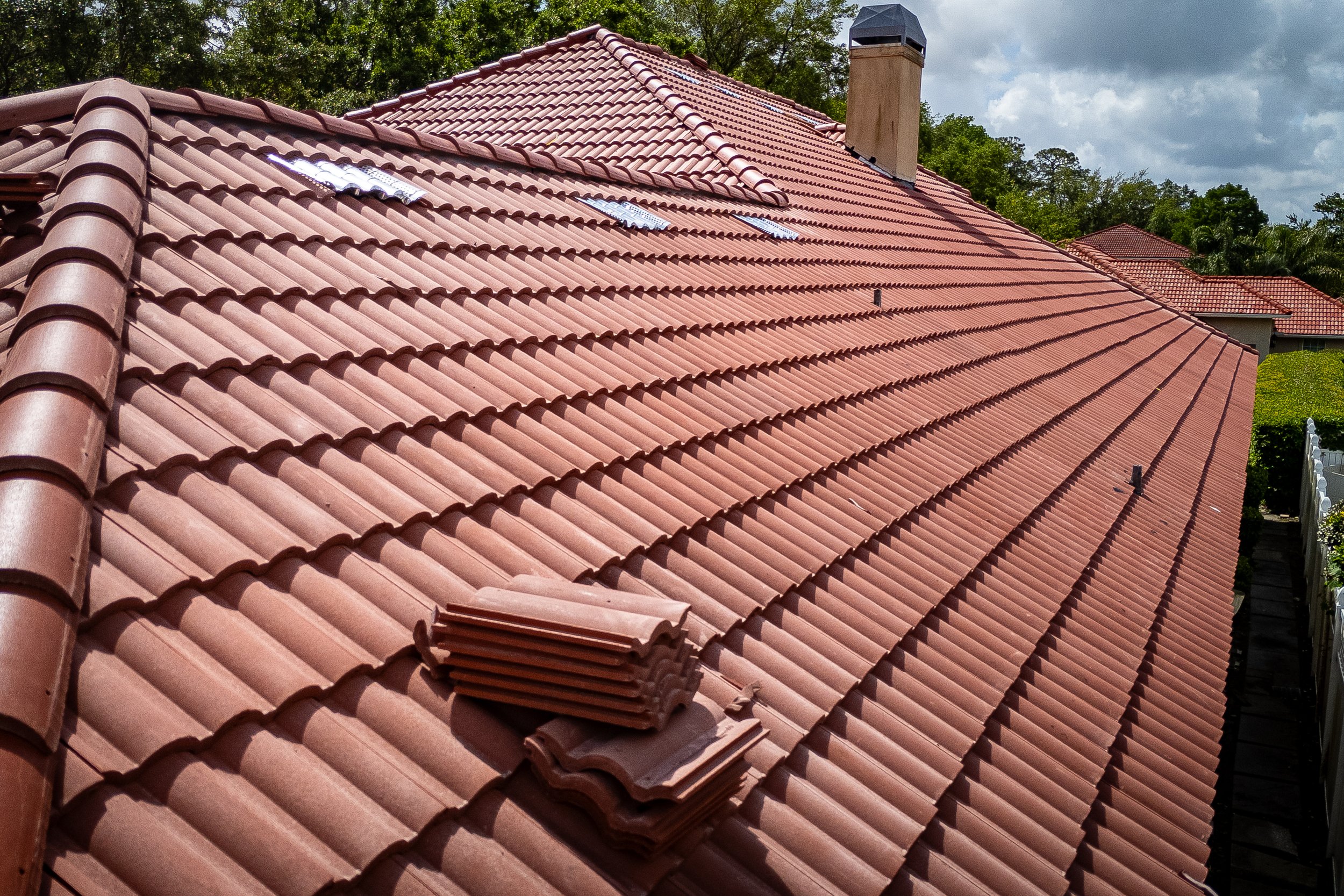
Tile Roofing Contractor in Jacksonville, FL
Tile roofing is the premium choice for Jacksonville homeowners who want the longest-lasting, highest-performing roof available — and the architectural look that defines upscale neighborhoods across Northeast Florida. Concrete tile is the dominant system in this market, found throughout Deerwood, Deercreek, Palencia, Ponte Vedra, and most of Jacksonville's established communities. Clay tile is rare and considerably more expensive, reserved for high-end historic homes and properties where the exact aesthetic of true fired clay is the requirement. For those projects, NEXGEN has installed Ludowici clay tile — one of the most respected manufacturers in the country — and can source premium clay systems when the project warrants it.
NEXGEN Roofing installs concrete tile and clay tile roofing throughout Jacksonville and Northeast Florida. Both flat/low-profile and S-tile (barrel) profiles are available. Every installation is fully permitted, city-inspected, and backed by our 10-year workmanship warranty.
Our tile roofing services include:
Full Roof Replacement — complete tear-off, structural assessment, full underlayment system, tile installation to Florida Building Code. Fully permitted, city-inspected, 10-year workmanship warranty. Details →
Tile Repair — broken, cracked, or slipped tiles, ridge cap repairs, mortar and flashing work. Same-day assessment available. Schedule inspection →
Free Roof Inspection — full surface and underlayment assessment, written photo report, structural evaluation for homeowners considering tile. No obligation. Call (904) 802-7150.
We serve Jacksonville, Jacksonville Beach, Atlantic Beach, Neptune Beach, Ponte Vedra Beach, St. Augustine, Fernandina, St. Johns County, and all of Northeast Florida.
| Factor | Asphalt Shingles | Concrete Tile PRIMARY | Clay Tile PREMIUM |
|---|---|---|---|
| Performance | |||
| Expected Lifespan (Jacksonville) | 20–25 years | 40–50 years | 75–100+ years |
| Wind Resistance | 130 mph (Duration/HDZ) | 130+ mph (FBC compliant install) | 130+ mph (FBC compliant install) |
| Fire Rating | Class A | Class A | Class A |
| Water Absorption Rate | N/A | ~13% — peel-and-stick underlayment critical | ~6% — naturally low |
| Salt Air / UV Performance | Adequate w/ proper hardware | Good — color can fade over time | Excellent — color baked in, won't fade |
| Energy Performance | Absorbs heat | Reflects heat — cooler attic | Reflects heat — cooler attic |
| Installation & Structural | |||
| Weight per Square | 250–400 lbs | 820–1,000 lbs — structural assessment required | 600–650 lbs — lighter than concrete |
| Structural Assessment Needed? | No | Yes — for shingle-to-tile conversions | Yes — for shingle-to-tile conversions |
| Underlayment Standard | Synthetic underlayment | Peel-and-stick self-adhering (NEXGEN standard) | Peel-and-stick self-adhering (NEXGEN standard) |
| FBC Wind Zone II Compliant | ✓ | ✓ | ✓ |
| Cost & Value | |||
| Upfront Cost (Jacksonville) | $8,500–$25,000 | $35,000–$76,000 | Significantly higher — project dependent |
| Long-Term Value | Good | Very Good — likely last 50yr roof | Best — likely last roof ever needed |
| Jacksonville Insurance Impact | Non-renewal risk at 15 years | Effectively eliminated | Effectively eliminated |
| NEXGEN Installs | ✓ | ✓ Primary tile system | ✓ Select projects incl. Ludowici |
| Neighborhood / Area | Common Profile | Common Material | Notes |
|---|---|---|---|
| Deerwood / Deercreek | S-Tile (Barrel) | Concrete | Tile is dominant — most HOAs require matching profile and color |
| Palencia | S-Tile (Barrel) | Concrete | Mediterranean aesthetic throughout — tile standard in most sections |
| Sawgrass / TPC | S-Tile (Barrel) | Concrete | Upscale community — tile dominant, HOA approval typically required |
| Ponte Vedra Beach | S-Tile or Flat | Concrete or Clay | Mix of profiles — high-end properties may specify clay |
| Mandarin / Julington Creek | S-Tile or Flat | Concrete | Tile common in larger custom homes — shingles also prevalent |
| San Marco / Avondale | Flat / Historic | Clay (historic) | Historic district homes may require clay to maintain original character |
| World Golf Village / Nocatee | Flat or S-Tile | Concrete | Newer communities — both profiles available depending on HOA |
| Atlantic/Neptune/Jax Beach | Various | Concrete or Clay | Coastal exposure — aluminum hardware required, clay preferred for high-value oceanfront |


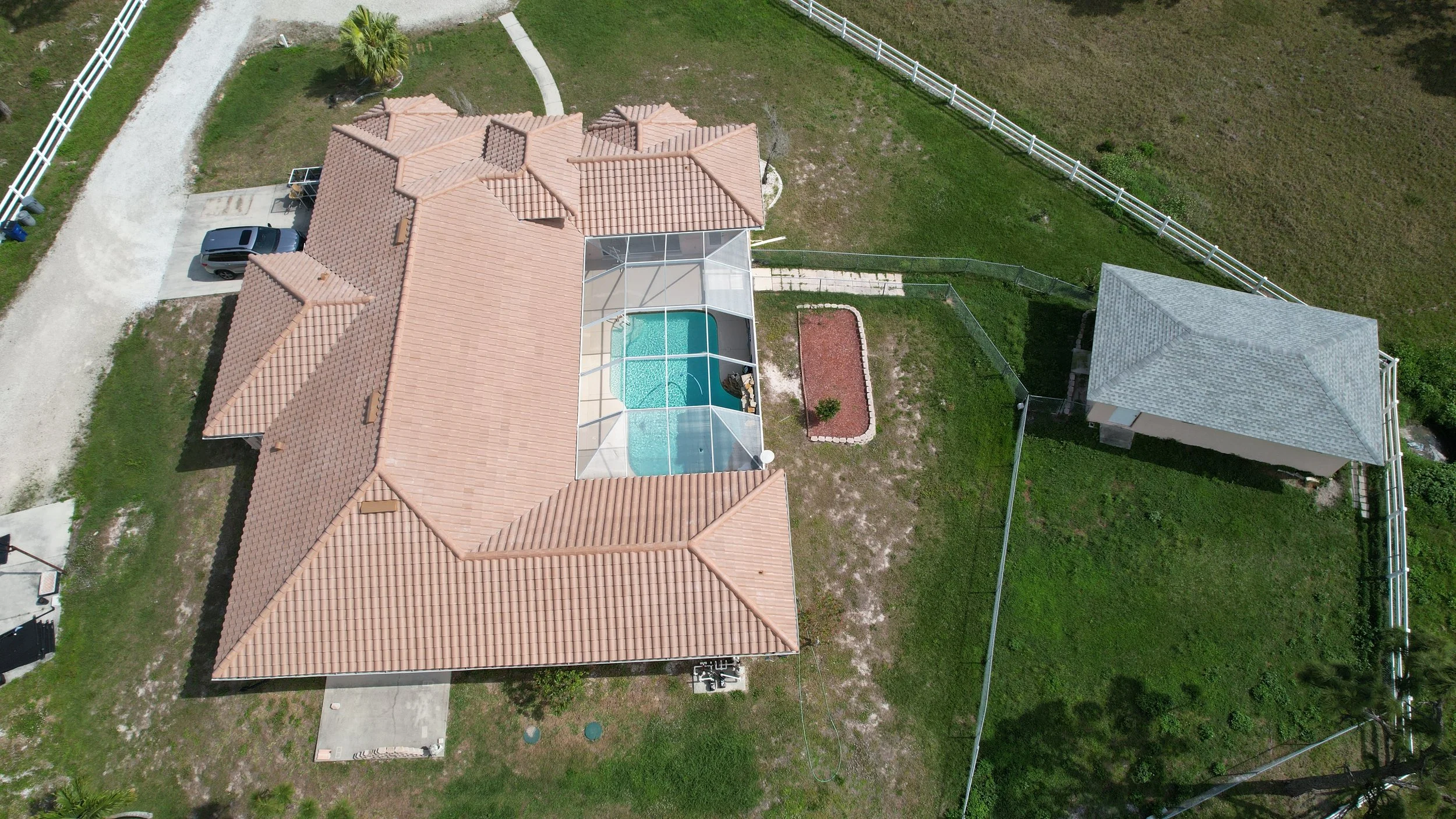
Concrete Tile vs Clay Tile — The Real Differences
Concrete Tile
Concrete tile is manufactured from a cement-based mixture molded under heat and pressure. It's the workhorse of Florida tile roofing — found on the vast majority of tile-roofed homes in Jacksonville for good reason. It's significantly less expensive than clay, available in a wide range of profiles and colors, and delivers exceptional performance in Florida's climate when properly installed.
The two profiles NEXGEN installs: flat/low-profile tile sits close to the roof deck with a clean, modern appearance common in contemporary architecture. S-tile (barrel) has a curved profile that creates the undulating shadow lines associated with Mediterranean and Spanish Colonial architecture — the dominant aesthetic in Deerwood, Deercreek, and Ponte Vedra.
One technical consideration specific to concrete: it has a higher water absorption rate than clay — approximately 13% versus clay's 6%. This means proper underlayment is critical. NEXGEN installs a full peel-and-stick membrane underlayment on all concrete tile installations — not the minimum code requirement, but the spec that protects your home when tiles crack or shift over time.
Clay Tile
Clay tile is the premium material — fired at high temperatures, naturally dense, and virtually impervious to water absorption. A well-installed clay tile roof can last 100 years or more. The color is baked in rather than applied, meaning it doesn't fade. Salt air and UV exposure that accelerate concrete tile aging have minimal effect on true fired clay.
The tradeoff is cost and weight. Clay tile costs significantly more than concrete, and it's heavier — approximately 600–650 lbs per square versus 820–1,000 lbs per square for concrete. Both require proper structural evaluation before installation. A home that already has a tile roof is typically already framed to support tile weight. A home switching from shingles to tile requires a structural assessment first — NEXGEN performs this as part of every tile inspection.
For most Jacksonville homeowners, concrete tile delivers 95% of what clay tile does at a fraction of the cost. Clay is the right answer when the project is a historic home requiring exact material matching, a high-end coastal property where longevity and salt air performance are paramount, or a homeowner with no budget constraint who wants the absolute best.
Ludowici — Premium Clay for Demanding Projects
Ludowici is the benchmark for premium clay tile in the United States — used on historic estates, university buildings, and high-end residential projects where the tile itself is a defining architectural feature. NEXGEN has completed Ludowici installations and can source and install these systems for projects where quality and authenticity are the primary considerations. If you're restoring a historic home or building new and want a roof that will outlast the structure, this is the conversation to have.
Tile Roofing and Florida's Climate
Jacksonville's climate is demanding for roofing materials — high UV, humidity, salt air near the coast, and periodic hurricane-force winds. Tile handles all of these better than shingles, which is why it dominates the premium residential market in Florida.
Wind resistance is the critical specification for Jacksonville's Wind Zone II. Properly installed tile systems using mechanically fastened tiles with appropriate foam adhesive or mortar at ridges and hips achieve wind ratings that meet or exceed FBC requirements. The installation method — not just the tile itself — determines how the system performs in a storm. NEXGEN follows FBC installation requirements on every tile job.
The underlayment is the most important component in a tile roof. The tiles themselves shed water, but the underlayment is what actually keeps water out of your home. A tile roof with a degraded or improperly installed underlayment will leak even if every tile is intact. NEXGEN uses peel-and-stick self-adhering underlayment on all tile installations — significantly above the minimum code requirement.
Weight and structural requirements are the most common reason homeowners who want tile get talked out of it. The honest answer is that most Jacksonville homes built in the last 30 years in established neighborhoods like Deerwood, Palencia, and Deercreek are already framed for tile loads. A NEXGEN inspection will tell you definitively whether your home's structure is compatible. We don't assume — we assess.
Is Tile Right for Your Home?
Tile is the right choice when longevity is the priority and budget is not the primary constraint, when your home's architecture calls for the Spanish Colonial or Mediterranean aesthetic that tile defines, when you're in a coastal or high-UV location where shingle lifespan is shortened, when you want the last roof you'll ever need to buy, or when your neighborhood has tile roofs and maintaining architectural consistency matters.
It may not be the right choice when upfront budget is the overriding constraint, when your home's structure cannot support tile loads without significant modification, or when your project timeline doesn't accommodate the typically longer lead times for tile materials.
NEXGEN will give you a straight answer after the inspection. [See how tile compares to shingles →](/shingles) and [metal roofing →](/metal-roofing-system). For pricing across all three systems, see our [Jacksonville Roof Cost Guide →](/roof-cost-jacksonville).
Why NEXGEN for Tile Roofing
Structural assessment on every tile job — we evaluate load capacity before recommending any tile installation on a home currently roofed with shingles.
Peel-and-stick underlayment as standard — the spec that protects your home when individual tiles crack or shift, not the minimum code requirement.
10-year workmanship warranty on every installation — applies to tile the same as every other system we install. [Warranty details →](/warranties)
Fully permitted and city-inspected — every project. Permit history and Certificate of Completion included at close.
451+ Google reviews — the most of any privately held roofing contractor in Jacksonville. [Read them →](/our-reputation)
Financing available → from 9.99% APR. Tile's higher upfront cost can be financed at competitive rates.
Ready to find out if tile is right for your home? Schedule your free inspection →or call (904) 802-7150.
Get ready to elevate your roofing game.

“The NexGen Roofing team is by far the best roofing company I have dealt with. From the customer service on the first call to the follow up after the work had been done, they make you feel like you are a top priority. ”
— Samuel Shaunak
Frequently Asked Questions — Tile Roofing in Jacksonville, FL
How long does a tile roof last in Jacksonville?
1
Concrete tile roofs typically last 40–50 years in Jacksonville's climate when properly installed. Clay tile roofs can last significantly longer — 75 to 100+ years for true fired clay. Both dramatically outlast asphalt shingles, which typically last 20–25 years in Northeast Florida. The underlayment — not the tile itself — is the most common failure point. A tile roof with a degraded underlayment will leak even if every tile is perfect.
Does my home's structure need to be reinforced for tile?
2
It depends on your current roof. Homes already roofed with tile are framed to support tile loads. Homes currently roofed with shingles require a structural assessment before tile can be installed. Tile weighs 820–1,000 lbs per square for concrete and 600–650 lbs per square for clay, compared to 250–400 lbs per square for shingles. NEXGEN performs a structural assessment as part of every tile inspection — we don't recommend tile installations on homes that cannot safely support the load.
What is the difference between concrete and clay tile?
3
Concrete tile is manufactured from a cement-based mixture and is the dominant tile roofing product in Jacksonville. It's less expensive than clay, available in a wide range of profiles and colors, and performs very well in Florida's climate. Clay tile is fired at high temperatures, is naturally denser and less porous than concrete (6% water absorption vs 13% for concrete), and can last significantly longer — 75 to 100+ years versus 40–50 years for concrete. Clay costs considerably more. For most Jacksonville homeowners, concrete tile delivers excellent value. Clay is appropriate for high-end, historic, or premium applications where longevity and authenticity are the primary considerations.
What is Ludowici tile?
4
Ludowici is one of the most respected premium clay tile manufacturers in the United States, known for producing architectural-grade clay tile used on historic estates, university buildings, and high-end custom homes. NEXGEN has installed Ludowici tile on select projects and can source and install these systems for homeowners requiring premium clay roofing. Cost is significantly higher than standard concrete tile — Ludowici is the right answer for a historic home, a high-end new build, or a project where quality and longevity are the overriding priorities.
How much does a tile roof cost in Jacksonville?
5
Tile roof replacement in Jacksonville typically costs $35,000–$90,000 for concrete tile depending on home size, roof complexity, and profile. Clay tile is considerably more expensive. See our Jacksonville Roof Cost Guide → for detailed pricing by home size. Financing is available → from 9.99% APR.
Does my home's structure need to be reinforced for tile?
6
It depends on your current roof. Homes already roofed with tile are framed to support tile loads. Homes currently roofed with shingles require a structural assessment before tile can be installed. Tile weighs 820–1,000 lbs per square for concrete and 600–650 lbs per square for clay, compared to 250–400 lbs per square for shingles. NEXGEN performs a structural assessment as part of every tile inspection — we don't recommend tile installations on homes that cannot safely support the load.
Can tile be installed over shingles?
7
Generally no — and NEXGEN does not recommend it. The weight of tile over an existing shingle layer adds significant load to a roof structure not designed to carry it. Full tear-off is required so we can inspect the decking, verify structural capacity, and install proper underlayment directly to the deck. Florida Building Code also requires permits for tile installation, and city inspectors will review the installation method.
How does tile handle hurricanes in Florida?
8
Properly installed tile using mechanically fastened tiles with appropriate foam adhesive at ridges and hips performs very well in hurricane conditions. The Florida Building Code specifies installation requirements for tile in Wind Zone II — the zone that covers most of Duval County. Individual tiles can crack or dislodge in extreme events, but a properly installed tile system with intact underlayment typically prevents water intrusion even when surface tiles are damaged. Every NEXGEN tile installation follows FBC specification.